


About Therapeutic Riding
How Horses Make a Difference:
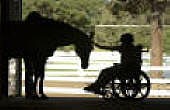
For children and adults with disabilities, the equestrian experience is life changing. No other therapeutic recreational opportunity benefits so many aspects of a disability in such a holistic way. Imagine the sense of confidence and independence a rider who uses a wheelchair feels on a horse. Think of a student's muscles growing stronger as he brushes his horse. Watch the emotional connection a rider develops with her horse, instructor, volunteers and fellow students. At TROT, these kinds of "Little Victories" happen every day. It's a special place where riders of all ages benefit physically, cognitively and emotionally from a wide variety of horse experiences tailored to their needs by a trained team of horses, instructors and volunteers.
Therapeutic riding and equine-assisted activities are uniquely
designed for people with cognitive, physical, emotional and social
disabilities. Students of all ages learn horsemanship and basic horse care
while receiving many benefits such as: improved balance, mobility, muscle tone,
coordination and posture, enhanced independence and increased concentration and
self-esteem. Therapeutic riding has proven to be a highly motivational and
enriching therapeutic and educational modality for students to set aside their
crutches, wheelchairs and disabilities as they settle into the saddle.
Therapeutic riding was developed in Europe during the early 1950's as a tool for improving the lives of individuals with physical disabilities. Today, individuals with cognitive, physical, developmental and emotional disabilities can benefit from equine assisted activities. As skills develop, many students go on to competitive events and other purposeful, safe and supervised interactions with horses.
|
|
